6 Parking Lot Problems Property Managers Should Never Ignore
As a property manager, your to-do list is never-ending. Parking lot maintenance may seem like an easy task to set aside, but a parking lot is not sepa...
After a long winter, it’s common for commercial properties to discover new pavement damage once the snow melts. While snowplowing is essential for snow removal and parking lot safety, it can contribute to surface wear, cracks, and other issues, especially on already stressed pavement. Knowing how to assess and address this damage early can help maintain a safe surface, clean appearance, and long-term pavement performance.
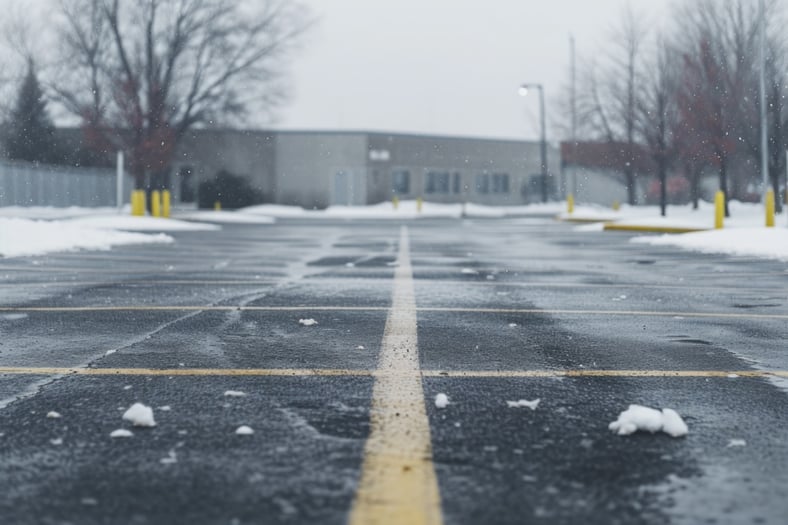
The winter months can be brutal to asphalt pavement parking lots and other paved surfaces. The cold temperatures cause frozen asphalt to become more brittle, and the snow removal process can be detrimental, especially if pavement is not routinely maintained.
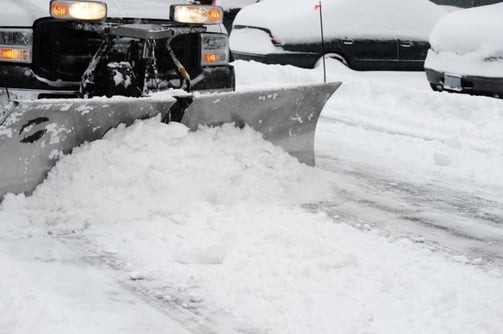
When heavy snowplows drive and remove snow with repeated blade contact on the pavement, it causes weak areas to give out, and existing cracks get progressively worse. Because the snow acts as a blanket that hides problematic areas, snowplows cannot see areas that are already compromised, such as potholes, and the continued traction causes more and more damage to these problematic areas.
Related: How Freeze-Thaw Cycles Damage Asphalt (And What to Do About It)
The first thing to do once the snow melts and the weather begins to warm up is to take a good look at your paved surfaces to see what you're dealing with. Start with a thorough walk-through and look for the following damages and issues:
Although pavement damage once the snow melts can be quite apparent, it's best to have a pavement professional with a trained eye perform a walk-through with you. They can help identify problematic areas you may miss.
Below, we'll look at the typical types of damage so you can understand what should be addressed right away to protect your pavement investment and the safety of visitors using your parking lots.
How to Spot and Address Early Signs of Asphalt Damage
Surface-level damage is typically cosmetic and caused by regular wear and tear from traffic, weather, and winter maintenance from salt, shoveling and snowplows. Surface damage includes minor scraping, light surface wear, or faded line striping. While these issues may not impact the functionality of your parking lot, addressing them early helps maintain a clean, professional appearance and prevents further deterioration.
Moderate damage will begin to affect the performance of your parking lot and should be addressed sooner rather than later. This type of damage involves widening cracks, small potholes, and areas with poor drainage, which can be negatively affected by regular snowplow activity.
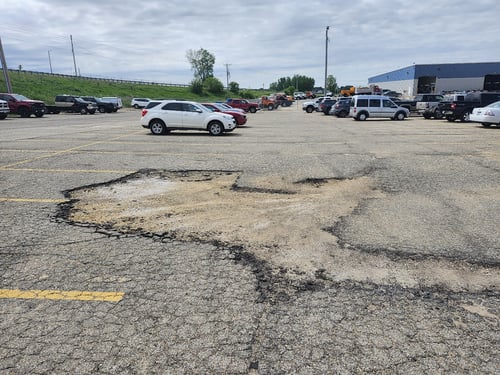
Severe damage means deeper structural concerns that go beyond surface-level fixes. This looks like large potholes, widespread cracking, or signs of base failure can compromise the safety and usability of your lot. These issues are often made worse after harsh winters and repeated plowing, and typically require more intensive repairs.
Understanding the type and severity of damage your parking lot is experiencing is key to choosing the right repairs and pavement contractor. Winter conditions and snowplow use can accelerate normal wear, which is why early assessment is even more important in colder climates.
Understanding the Asphalt Lifecycle and When to Sealcoat
When assessing the post-winter condition of your pavement and determining where to begin when it comes to making repairs, it's essential to first address any safety concerns. It's necessary for businesses and commercial properties to consider the potential liability risks associated with these hazards to mitigate potential problems.
Begin by correcting any potential trip hazards and potholes, especially in high-traffic areas such as entrances and loading zones. When prioritizing these repairs, it's essential to choose the right solution based on the specific issues at hand.
Based on the damage your parking lot endured from winter, you need the right pavement repairs to fix the problems you find. Your pavement will likely need a combination of these pavement repair methods.
Crack filling is one of the first repairs to make; it is a crucial pavement repair technique that helps prevent water intrusion and further damage.
Patching is ideal for addressing potholes and localized damage. This solution is a quick fix that helps restore the surface's integrity.
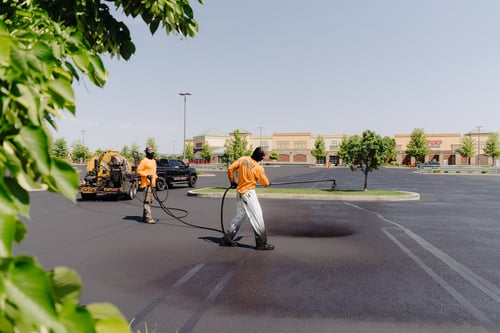
This pavement maintenance process restores surface protection and improves appearance, helping extend the life of the pavement.
Microsurfacing is an advanced asphalt pavement maintenance solution that is best suited for widespread wear or aging pavement. This method can revitalize larger areas, enhance appearance and increase overall durability.
Once repairs and resealing are complete, your parking lot will need some fresh paint to reapply lines for parking spaces, pedestrian walkways, loading zones, fire lanes, ADA-compliant markings, directional arrows, and other essential safety and traffic flow indicators.
Microsurfacing vs. Sealcoating: What’s the Difference - Doctor Asphalt
One of the best things you can do for your pavement is to be proactive. The key to lessening the impact of winter and snowplow damage is to keep pavement in good condition. A well-maintained smooth parking lot surface will hold up much better to the scraping blades of a snowplow truck than a cracked and crumbling surface.
A professional assessment can help identify hidden damage and recommend the right repair strategy to keep your lot safe, durable, and ready for the season ahead.
At Doctor Asphalt, we specialize in commercial asphalt repair, working with property managers to develop pavement maintenance plans that make sense for their budgets and timelines.
Stay ahead of the damage and schedule a site evaluation or contact us for a free estimate today.
Doctor Asphalt delivers high-quality asphalt paving and maintenance solutions designed for the unique demands of the local climate. With a strong reputation for reliability and expertise, we provide premium services that enhance the safety and longevity of commercial and residential properties. Serving Wisconsin, Minnesota, and Texas, with nationwide capabilities for multi-property clients, we ensure durable, professional results that keep your pavement in top condition.