How Midwest Winters Damage Asphalt and What Property Owners Can Do
In the Midwest, winters can be frigid, harsh and seemingly never-ending. The snow and ice create challenging conditions for vehicles and pedestrians a...
ADA (Americans with Disabilities Act) compliance is an important consideration for any business or property with customers, employees, or visitor parking. And it all begins before they even enter the building, in the parking lot. Parking lot accessibility involves a lot more than simply providing designated accessible spaces.
Everything from striping, signage, slopes, and accessible routes all plays a critical role in making your property safe and welcoming. So if you own or manage a business or property, keep reading to find out what you need to know to do just that and stay compliant.
Do you remember when your parking lot was newly installed or had its last major facelift? If that feels like it was a while ago, you might be facing ADA compliance violations without even knowing it.
A common assumption that many property managers have is thinking that because their parking lot was originally designed and built to meet accessibility requirements, it continues to do so. However, the reality is that wear and tear, damage, layout changes, and paving or resurfacing projects can impact accessibility over time.

Property owners need to consider accessibility as part of their ongoing pavement maintenance, routine inspections, and capital improvement planning. Partnering with a professional paving contractor who regularly handles large corporate accounts, franchises, and national portfolios, as well as small businesses, is essential to getting this right and ensuring your paved surfaces remain safe and compliant.
Find Out How to: Standardize Pavement Maintenance Across a National Portfolio
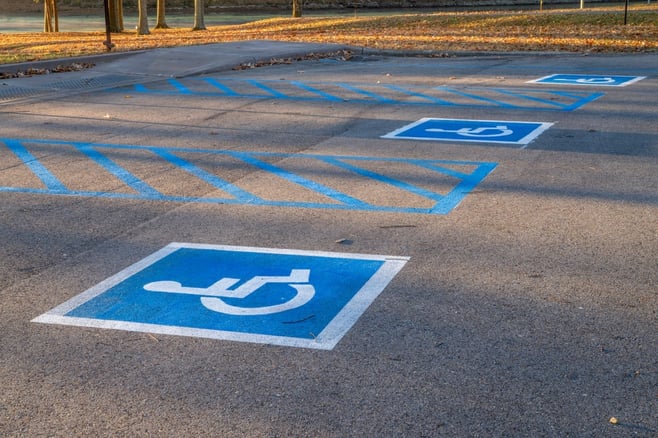
We've all seen it: you pull into a parking spot, only to get closer and realize the faded paint on the pavement is all that's left of an accessible parking symbol. Or worse, the markings have worn away so much that you don't notice them at all.
Unfortunately, this happens more often than it should. Over time, factors such as weather, vehicle and foot traffic, and general wear can cause pavement markings to fade, which makes it harder to identify designated handicap parking spaces. In some cases, the markings may be missing altogether, which can create confusion and frustration and make it more difficult for those who rely on these spaces to find and use them.
Regularly refreshing line striping, traffic flow arrows and parking lot markings helps keep accessible parking spaces clearly marked and easy to recognize.
Signage is one of those things that's easy to overlook until it's missing or difficult to read. Accessible parking signs need to be easy to spot and clearly identify designated spaces. When signs are damaged, blocked, or poorly positioned, visitors may have a harder time finding the accessible parking they need.
Routinely check accessible parking signs to make sure they're clearly visible, properly placed, and in good condition. Promptly replace any damaged or missing signs to help keep accessible spaces easy to identify and use.
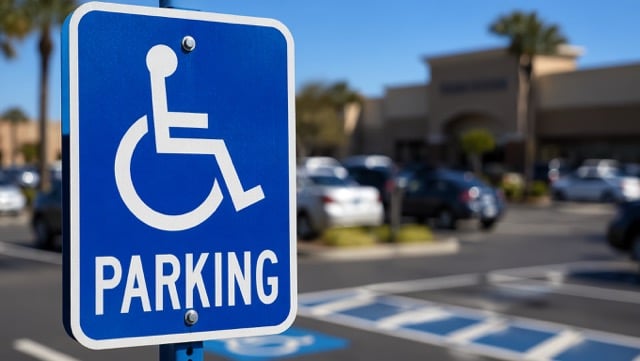
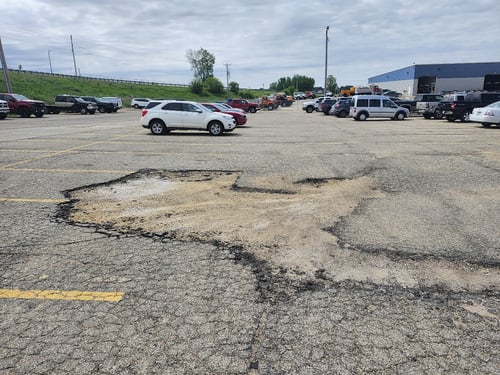
We've all had to dodge a pothole or step around a crack in the pavement, but for someone with a mobility challenge, these issues can be much more than a minor inconvenience. Potholes, cracked asphalt, and uneven pavement can make it difficult to navigate a parking lot safely, especially along designated accessible routes. And although these are some of the more visible parking lot issues, they often go overlooked.
The ADA National Network emphasizes that accessible parking spaces, access aisles, and routes must be maintained in good repair and kept clear of snow, ice, and fallen leaves. These are some of the more visible parking lot issues and shouldn't be overlooked.
Regular inspections and timely pavement repairs help keep accessible routes smooth, safe, and easier for everyone to use your parking lot.
Not all parking spaces are created equal, and when it comes to handicap accessible parking, the size and layout really matters. Have you ever pulled into a parking spot and gone to open your car door only to realize there's barely enough room to open it, let alone get out? Now imagine needing extra space to safely get in and out of your vehicle or maneuver a wheelchair.
Accessible parking spaces must meet specific size requirements, including designated access aisles that provide enough room for people to enter and exit their vehicles safely. For example, standard accessible parking spaces must be at least 96 inches wide, with an adjacent access aisle at least 60 inches wide. When spaces are too narrow or access aisles don't provide adequate clearance, it can make parking a frustrating and potentially unsafe experience for those who rely on them.
Proper layout and clear line striping help ensure these spaces provide the room they're intended to offer.
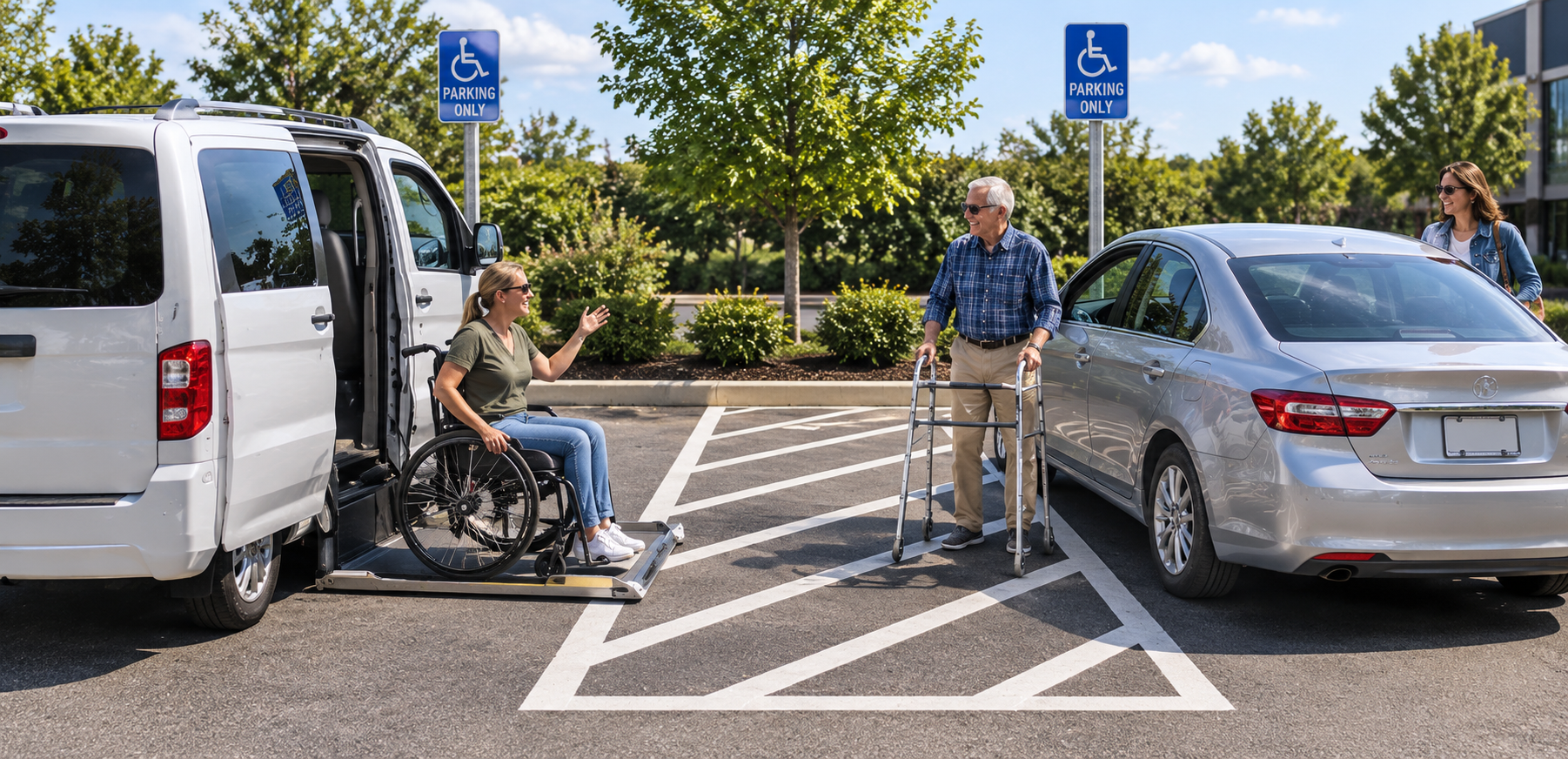
Commercial parking lots should be inspected periodically to ensure they meet all these factors. No inspection guarantees compliance; however, regular parking lot inspections can help identify faded markings, damaged signage, pavement deterioration, and other accessibility concerns before they become bigger problems. Ideal inspection frequency depends on your parking lot and business type, but in general, most properties should be inspected once or twice per year.
It's important to keep in mind that routine pavement maintenance doesn't automatically mean compliance, which is why asking the right questions before hiring a pavement maintenance contractor and choosing one who understands the legal requirements and performs parking lots on properties like yours and can ensure ADA compliance is met.
Find Out How to Choose an Asphalt Contractor Beyond the Online Reviews
Accessibility isn't a good-to-have; it's a legal requirement that should be part of ongoing parking lot maintenance and long-term planning. As a property owner or property manager in charge of commercial pavement maintenance, addressing visible issues quickly is key to preventing potential compliance concerns.
Not sure what your parking lot needs to stay compliant? We can help; our team of pavement experts can evaluate your property and provide guidance on applicable requirements for your business type and property.
Have questions about your parking lot's accessibility? Let's talk. Whether you're starting to notice faded striping, pavement damage, or looking to plan a larger improvement project, the team at Doctor Asphalt is ready to help.
Sources:
https://www.ada.gov/topics/parking/
https://adata.org/factsheet/parking/
Doctor Asphalt delivers high-quality asphalt paving and maintenance solutions designed for the unique demands of the local climate. With a strong reputation for reliability and expertise, we provide premium services that enhance the safety and longevity of commercial and residential properties. Serving Wisconsin, Minnesota, Texas, and Florida with nationwide capabilities for multi-property clients, we ensure durable, professional results that keep your pavement in top condition.